
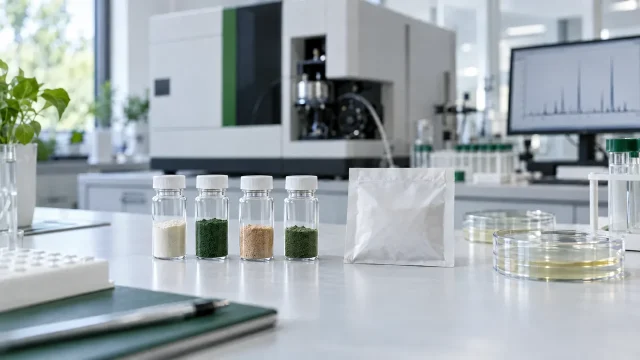
If you’ve been wondering what we test for with independent third-party laboratories here at PlantPills, why they are performed, what the results all mean, and how to interpret the results, especially the heavy metals and microbiological certificate of analysis that we perform for every batch of every product of ours, have a read through this article.
You can find current and historic batch certifications on our certifications page here.
A supplement laboratory report is not one overall score, it records the result of named tests on the submitted sample. Heavy-metal, arsenic, pesticide and microbiology tests answer different questions, and each needs to be read with its own method, unit and reporting limit.
The most important starting point is the amount actually consumed. A reported concentration, a trace detection or a result below a reporting limit is not the same thing as harm. Possible exposure depends on the serving size, how often the product is used, how long it is used, the chemical form where that matters, body weight and exposure from food, water, medicines or other sources. A report also does not show how much of a substance a person absorbed, or their level in blood or tissue.
From concentration to the amount in a serving
For a solid product, 1 mg/kg is the same concentration as 1 ppm: one milligram of a substance in one kilogram of product. This allows us to compare between products and batches, but it is not the amount in a scoop, capsule or tablet.
When the serving weight is known, the amount in micrograms (µg) can be calculated as follows:
Amount per serving (µg) = result (mg/kg or ppm) × serving size (g)
For example, a hypothetical result of 2 mg/kg in a 3 g serving would be 2 × 3 = 6 µg per serving, which is 0.006 mg. Taking two servings would double that hypothetical product intake; a different serving size would change it again.
This calculation is a useful first step, not a complete risk assessment. Some results measure a total element or total chemical group, while the health evidence may concern one form within that total. Repeated exposure and a person’s circumstances also matter.
Metals and arsenic
Lead (Pb)
ICP and ICP-MS are laboratory methods for measuring elements. A lead result from these methods generally measures total lead in the tested supplement sample. It does not identify the original lead compound, the source of the lead, how much a person absorbs or anyone’s blood-lead level. Lead can enter food and water from contamination in the environment. Young children are especially sensitive because they absorb a greater proportion of ingested lead and their nervous systems are developing; pregnancy also requires care because stored lead can enter the blood and cross the placenta. [1] [2] [3]
At a sufficiently high short-term swallowed dose, lead can cause abdominal pain, constipation, nausea or vomiting and can affect the nervous system, blood-forming system and kidneys. Repeated excessive exposure can contribute to anaemia and kidney toxicity, and cardiovascular effects are a concern in adults. These effects depend on dose and duration; a single reported concentration is not a diagnosis of exposure or harm. [1] [2]
Total arsenic (As)
A total-arsenic result measures the arsenic captured by the method across arsenic compounds. It cannot show how much is inorganic arsenic, which is a separate group of compounds and a separate health question. Laboratories can measure total arsenic after digestion with ICP-MS, but separating inorganic arsenic from other arsenic forms requires a method that separates and measures the different forms (speciation), such as HPLC-ICP-MS. [4] [5]
This distinction matters because the principal dietary health concern is excessive exposure to inorganic arsenic, rather than every total-arsenic result. Large acute ingestion of inorganic arsenic can cause nausea, vomiting and diarrhoea; severe poisoning can cause dehydration, cardiovascular collapse and kidney injury. Repeated high intake over months or years is associated with skin, bladder and lung cancers, as well as evidence for skin, developmental, pregnancy and kidney effects. A total-arsenic figure alone cannot establish an inorganic-arsenic dose or predict these outcomes. [4] [6]
Inorganic arsenic
An inorganic-arsenic result is more specific than a total-arsenic result: it measures the stated inorganic portion, rather than assuming that all arsenic detected is inorganic. Organic arsenic compounds are chemically different. Read it with the serving size, frequency of use and the rest of a person’s food and water exposure. [4] [5] [7]
Inorganic arsenic can reach foods through soil, water and processing. WHO and EFSA describe concern about chronic intake because of associations with cancers of the skin, bladder and lung, alongside other effects including skin lesions, chronic kidney disease and neurodevelopmental effects. It crosses the placenta, and children receive a higher body-weight-adjusted dose from the same absolute intake. That is a reason for careful interpretation of repeated exposure, not a reason to infer harm from one result. [4] [7] [8]
Cadmium (Cd)
In a typical acid-digestion ICP-MS method, a cadmium result is a total acid-extractable elemental result for the tested sample. It does not show the original cadmium compound, how much is absorbed or the body burden of the person using the product. Food is the main source of cadmium exposure for non-smokers, and regular intake over time matters because cadmium can build up, particularly in the kidneys. [9] [10] [11]
A high swallowed dose can irritate the gut, causing nausea, vomiting, abdominal pain or diarrhoea. The main concern from excessive long-term oral exposure is kidney tubular damage, which can cause protein in the urine and, in severe cases, kidney failure; bone effects can also follow disruption of vitamin-D and calcium handling. These are dose- and duration-dependent effects. UKHSA notes that evidence for cancer risk is strongest for inhaled cadmium, not oral exposure. [9]
Mercury (Hg)
Unless a report explicitly describes mercury speciation, an ICP or ICP-MS result should be read as total or method-extractable mercury, not proof of a particular form such as inorganic mercury or methylmercury. Those forms have different exposure contexts. A non-detect means below the stated method’s detection or reporting limit, not necessarily zero mercury. [12] [13] [14]
With sufficiently high ingestion of inorganic mercury compounds, the digestive tract and kidneys can be affected; repeated exposure can affect the nervous system and may lead to renal failure. Methylmercury is an organic form commonly associated with contaminated fish and shellfish, and developing babies and young children are particularly vulnerable to its effects on nervous-system development. A non-speciated total-mercury result cannot establish that methylmercury is present. [12] [13]
Aluminium (Al)
An ICP-OES or element report for aluminium measures elemental aluminium in the prepared test portion. It does not identify a particular aluminium compound, source, bioavailability or a person’s aluminium level. Diet is a main exposure route for the general population, while food additives, food-contact materials and some medicines can also contribute. [15] [16]
Only a small proportion of ingested aluminium is absorbed, and much of that is removed in urine. With high body burdens, especially where kidney function is impaired and removal is reduced, aluminium has been associated with bone disease and effects on the nervous system. Long-term high intake from some aluminium-containing oral medicines has also been associated with bone effects. EFSA’s weekly-intake context is for total dietary exposure; it is not a universal pass/fail ppm limit for a supplement result. [15] [16]
Pesticide residues (contaminant screen)
A pesticide-residue panel is a targeted screen for the named substances within its stated scope. For example, a stated USP <561> screen for 69 named pesticides and organic contaminants can report a measured amount or a result below the laboratory’s reporting or quantification limit for those analytes. It does not test every possible chemical, and it does not stand in for metals, microbiology or mycotoxin testing.
Pesticides can leave residues on botanical materials after cultivation or storage. The relevant interpretation depends on the named pesticide, result, method limit, commodity and intended intake. UK rules use substance- and commodity-specific maximum residue levels (MRLs), while EFSA assesses dietary risk using occurrence and food-consumption data. Effects of excessive exposure vary by pesticide and by dose and duration. A trace result, or a result above an MRL alone, should not be presented as proof that a person will be harmed. [17] [18] [19]
Microbiology: what a count can and cannot show

Microbiology reports often use cfu/g, meaning colony-forming units per gram. In a culture test, this is an estimate of organisms from the submitted sample that grew into colonies under the laboratory’s stated conditions. It is not a direct count of every organism present, and it is not an infectious-dose calculation.
“Absent”, “not detected” or a result below a reporting limit applies to the stated sample, method and time of testing. It is not a guarantee for every portion or future batch. Conversely, a detected count does not on its own identify a strain, toxin, viability at the point of use or the likelihood that a person will become ill. Product-specific specifications, sample size, detection limits and test methods matter.
Some microbiology results are indicators of hygiene, quality or process control; they are not pathogen tests. Others are named-organism tests. An opportunistic organism may be clinically important in particular settings without a genus-level result predicting illness from swallowing a supplement. Finally, yeast or mould counts are not mycotoxin results: testing for a fungal toxin is a separate targeted chemical test. [20] [21] [22] [23] [24]
Total viable / total / aerobic plate count
Total viable plate count (TVPC), total plate count (TPC) and aerobic plate count (APC or ACC) are related names for a broad culture-based count of organisms that form colonies under specified aerobic conditions. The result is usually reported in cfu/g. It estimates general microbiological quality; it does not identify the organisms counted, test for a pathogen, measure a toxin or show an infectious dose. [20] [21]
A result above a product’s own specification can prompt a review of raw materials, manufacturing hygiene, moisture, storage or shelf-life controls. UKHSA describes ACC as an indicator of quality rather than safety. The count itself does not cause symptoms. If a product actually contains a disease-causing organism and enough viable organisms are swallowed, foodborne illness may cause diarrhoea, cramps, nausea, vomiting or fever; that outcome cannot be inferred from a broad plate count alone. [20] [22]
Yeast/mould (microbiological indicator test)
A yeast and mould count is a culture-based count of fungi that grew from the tested sample, usually in cfu/g. It is useful as a quality, spoilage and process-hygiene indicator, but it is not a species or strain identification, a pathogen test or a measure of one-serving exposure. Yeast growth can contribute to spoilage through acid and gas production, while counts need product- and process-specific interpretation. [20]
A fungal count does not show that mycotoxins are present, and it does not rule them out. Only particular moulds can produce particular mycotoxins under relevant conditions, so toxin analysis needs its own targeted test. If a particular mycotoxin is confirmed separately, possible effects depend on that toxin, concentration per serving, body weight and repeated exposure. WHO describes toxin-specific acute gastrointestinal effects at high exposure and longer-term kidney, immune or cancer concerns for some mycotoxins; those effects must not be inferred from cfu results alone. [23] [24]
Coliforms
Coliforms are a broad group of bacteria used as a hygiene indicator. Depending on the method, a report may give presence/absence or a count in cfu/g. A coliform result does not identify the species or strain, establish an infectious dose, demonstrate a toxin or replace pathogen-specific testing. [20] [25] [26]
A finding can signal poor hygiene, cross-contamination or another loss of process control and may lead to a review of ingredients, manufacture and handling. It does not, by itself, show that a pathogen was present in the tested sample or that someone will become ill. If a contaminated product also contains a disease-causing organism, gastrointestinal illness such as diarrhoea is possible, but the outcome depends on the organism, strain, amount swallowed and any toxin involved. [20] [25]
Escherichia coli (E. coli)
A generic E. coli result is commonly used as a hygiene or possible faecal-contamination indicator. It can point to contaminated ingredients or cross-contamination, but most E. coli are harmless. A generic count is not the same as a targeted test for pathogenic Shiga toxin-producing E. coli (STEC), and routine enumeration does not establish whether Shiga toxin is present. [20] [27] [28]
The reason for investigation is that pathogenic strains can cause foodborne illness when swallowed. STEC infection can cause stomach cramps and diarrhoea, sometimes bloody, with fever or vomiting; a small proportion of cases can lead to haemolytic uraemic syndrome and acute kidney failure. These effects concern pathogenic strains and must not be attributed to every generic E. coli result. [27] [28]
Staphylococcus aureus (S. aureus)
A named-organism test for Staphylococcus aureus may report detection or a viable count in the portion analysed. It is not, by itself, a test for staphylococcal enterotoxin, which is the toxin associated with staphylococcal food poisoning. S. aureus can be carried on skin and in the nose, so a result may be relevant to handling or post-processing hygiene; only some strains can make the relevant enterotoxins. [20] [30]
The food-poisoning concern is consuming food in which sufficient enterotoxin was already made, not a predictable effect of every count. If illness-causing toxin is present, nausea, vomiting, stomach cramps and diarrhoea can begin rapidly, commonly within 30 minutes to 8 hours. Illness is often short-lived, but fluid loss can cause dehydration. The amount eaten, toxin amount, strain and storage history all matter. [20] [30]
Salmonella / Shigella (named microorganism test)
Salmonella and Shigella tests are targeted named-pathogen tests, often reported as detected or not detected in a stated portion rather than as a general quality count. They should not be treated like a plate count or a metal concentration. A not-detected result applies only to the submitted sample and method; a detected result needs method and food-safety context and is not a diagnosis in a consumer. [20] [33]
If a contaminated serving is swallowed, Salmonella may cause diarrhoea, abdominal cramps, fever, nausea and sometimes vomiting. Shigella may cause diarrhoea, sometimes bloody, with cramps, fever, nausea or vomiting. Fluid loss can be serious, especially for young children, older people and people with weakened immune systems. Most illness resolves, but severe or persistent illness needs medical assessment. [31] [32]
Pseudomonas spp.
A result reported as “Pseudomonas” or “Pseudomonas spp.” identifies bacteria in the genus, not necessarily one identified species. Presence/absence and count methods answer different questions. The result does not by itself identify Pseudomonas aeruginosa, a strain, antibiotic resistance, toxin production or an infectious dose. [20] [29]
Pseudomonas bacteria are common in environmental sources such as soil and water. In a product, a recurring or raised result can help review water, equipment, cleaning, storage or other hygiene controls. The best-known clinically important species, P. aeruginosa, is an opportunistic organism linked mainly to healthcare-associated infections, with higher concern for people who are seriously unwell or have invasive devices, open wounds or burns. This does not mean that a genus-level report result predicts those effects from ingestion. [29]
Candida albicans (C. albicans)
Candida albicans is a species-specific yeast result, not a general yeast/mould assessment, a pathogen panel or a mycotoxin test. An absent or not-detected result means the organism was not found by the stated method in the laboratory sample; without the method, sample size and detection limit, it cannot establish whether testing was culture- or molecular-based, whether any cells were viable or whether every unit is free of the organism. [34] [36]
Candida commonly lives on the body without symptoms. A detection can be relevant to a review of handling, equipment hygiene and contamination control, but there is no established intake threshold at which swallowing C. albicans from a supplement causes illness. Candidiasis depends strongly on the person and body site, with risks influenced by factors such as immune status, diabetes and some medicines. Invasive candidiasis is a distinct, mainly healthcare-associated condition with particular clinical risk factors; it should not be inferred from a supplement test result. [34] [35]
Use the report as a record, not a verdict
The useful question is not whether a report contains a single “good” or “bad” number. It is what was tested, on which named batch, by what method, with what unit and reporting limit, and what amount could be consumed at the labelled serving. For results that need a closer interpretation, particularly a detected named pathogen, a result outside a product specification, or a question about pregnancy, children, kidney disease or another health condition, take the original report and product information to an appropriate healthcare professional.
References
- UK Health Security Agency, Lead: toxicological overview
- World Health Organization, Lead poisoning
- European Food Safety Authority, Scientific Opinion on Lead in Food
- European Food Safety Authority, Plain-language summary: Update of the risk assessment of inorganic arsenic in food
- Food Standards Agency, Contaminants Monitoring Programme for Wild Caught Fish, Crustaceans and Cephalopods (PDF)
- ATSDR/CDC, Clinician Brief: Arsenic
- World Health Organization, Arsenic
- UK Health Security Agency, Arsenic: toxicological overview
- UK Health Security Agency, Cadmium: toxicological overview
- European Food Safety Authority, Cadmium dietary exposure in the European population
- US Food and Drug Administration, Elemental Analysis Manual, Section 4.7: ICP-MS Method (PDF)
- UK Health Security Agency, Elemental mercury and inorganic mercury: toxicological overview
- World Health Organization, Mercury and health
- US Food and Drug Administration, Elemental Analysis Manual 4.8: HPLC-ICP-MS determination of methylmercury and total mercury in seafood (PDF)
- European Food Safety Authority, EFSA advises on the safety of aluminium in food
- ATSDR/CDC, Public Health Statement for Aluminum
- Food Standards Agency, Pesticides in food
- World Health Organization, Pesticide residues in food
- European Food Safety Authority, Pesticide residues in food
- UK Health Security Agency, Guidelines for assessing the microbiological safety of ready-to-eat foods placed on the market (2024 PDF)
- Food Standards Agency, Risk to consumers from the consumption of red meat produced in small throughput slaughterhouses due to process hygiene criteria sampling exemptions
- CDC, Food Safety Basics
- World Health Organization, Mycotoxins
- European Food Safety Authority, Mycotoxins
- Food Standards Agency, Survey of microbiological and antimicrobial-resistance contamination in whole-head lettuce
- CDC, Guidelines for Testing Well Water
- CDC, About Escherichia coli Infection
- World Health Organization, E. coli
- CDC, About Pseudomonas aeruginosa
- CDC, About Staph Food Poisoning
- World Health Organization, Salmonella (non-typhoidal)
- UK Health Security Agency, What is Shigella? How do you catch it and how can it be avoided?
- Food Standards Agency, Honey Risk Profile (PDF)
- CDC, Candidiasis Basics
- CDC, Risk Factors for Candidiasis
- Food Standards Agency, How do microbial safety issues associated with meat apply to cell cultivated products?


